by Jenna Lee on July 30, 2025
The Menlo Park Sister City Program was established in 2015. A sister city refers to a formal partnership between two cities from different countries that aim to promote cultural, commercial, and educational relations. In 2021, the Menlo Park Sister Cities Association was formed to further spread cultural enrichment.
Menlo Park has two sister cities — Bizen, Japan and Galway, Ireland. Every other year, students have the opportunity to travel to one of Menlo Park’s sister cities. In the alternative year, the sister city sends students to Menlo Park.
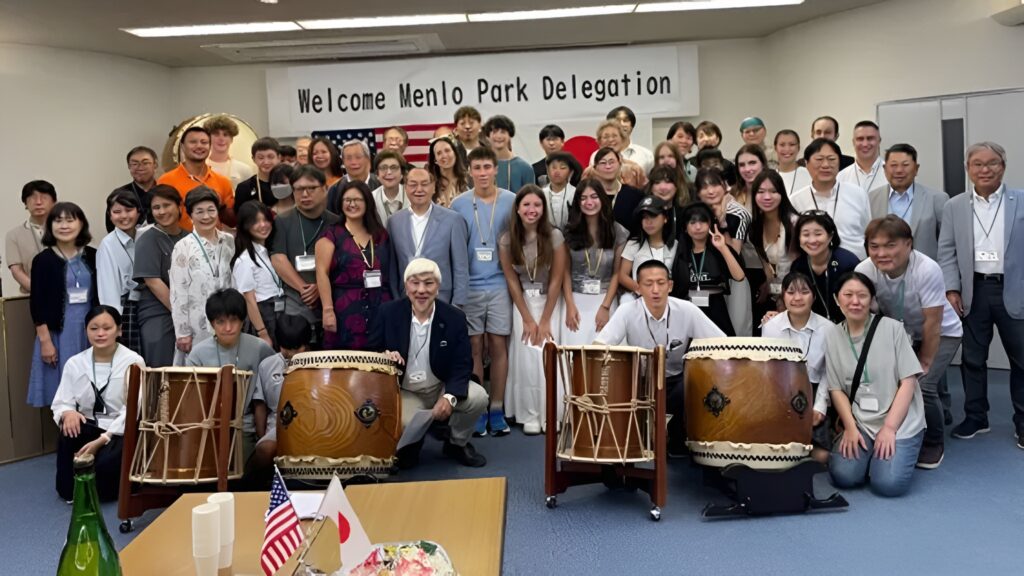
This June, the Menlo Park Sister Cities Association sent nine student ambassadors, ages 12-17, to Bizen, Japan for one week. I documented my experience on the trip and interviewed members of the program to highlight this transformative experience.
“Far away from the futuristic spectacles of Tokyo, Bizen is a city that has kept its artisan traditions, such as sword-making and pottery, close to its heart. It is more accessible and less overwhelming than the bigger cities, and the people here are friendly and want to make international friends,” said Ethan Cohn, the English-Japanese translator for Bizen.
“I hope that students gain an appreciation for a different culture, learn how other people live, and the different communication styles,” said Anna Enerio, one of the Board of Directors. “I think it is really important to embrace different cultures outside of our own.”
The Experience
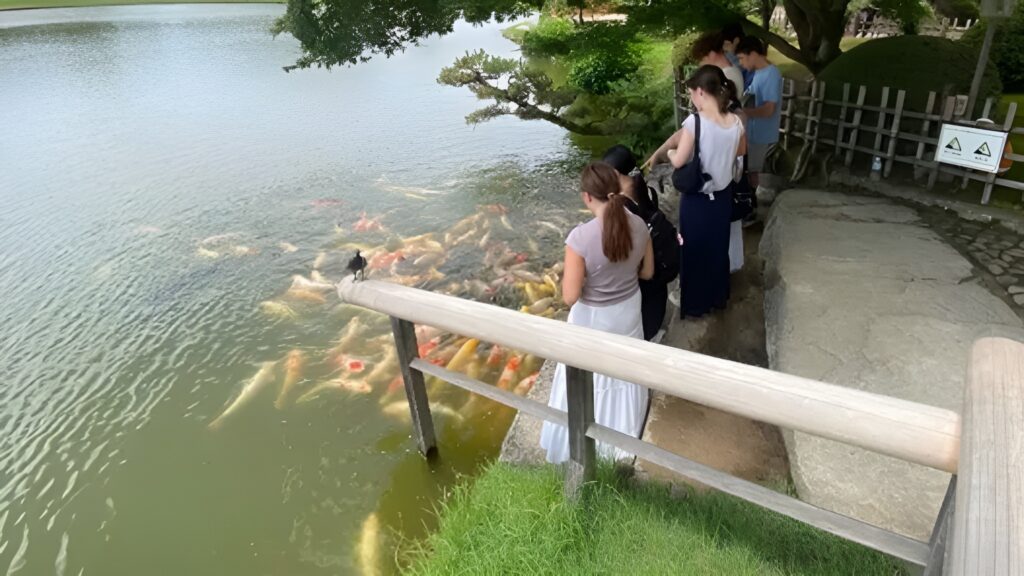
Bizen, Japan is a historical town made up of around 30,000 people, a population similar to Menlo Park. Located in Japan’s countryside, the town is green and peaceful. The city is known for its traditional arts, specifically Bizen ware, which was created in the 6th century. I was especially fascinated by how steeped in history Bizen is compared to Menlo Park, which was unofficially founded 171 years ago.
Throughout the experience, we visited a variety of historical landmarks in Okayama, Hiroshima, and Bizen. We traveled to the Itsukushima Shrine, looked at the Okayama Castle, and visited the Bizen Sword Museum. Each of these places holds a special place in Japanese history, and as we traveled to each destination, it felt like we were transported into the past.
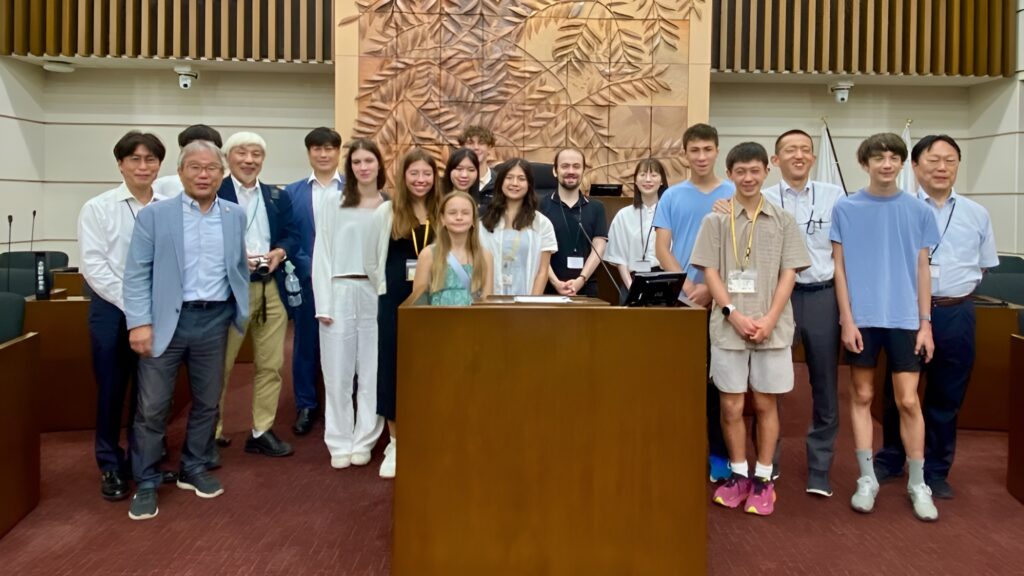
We met with local officials from the Bizen government. Although we could not communicate with them without a translator, it was clear how much they valued the sister city connection with Menlo Park. We saw how Bizen worked by visiting City Hall, meeting the mayor, and city officials. We visited Japanese schools and got to interact with children, seeing how Japanese school life is.
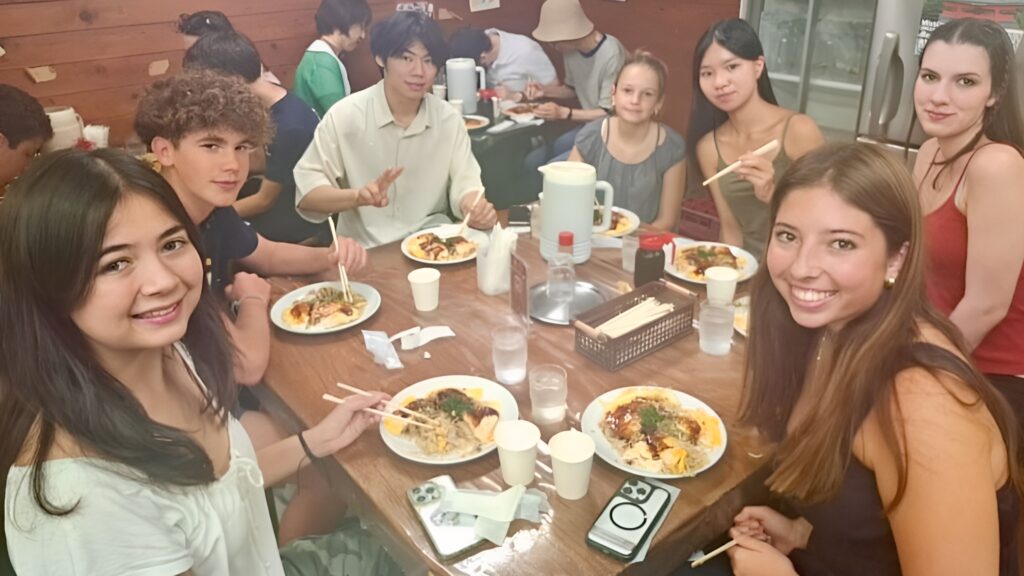
We had the opportunity to try new foods, such as okonomiyaki, a savory Japanese pancake filled with noodles. We also went all out with the diversity of food: delicious udon, yakisoba noodles, sushi, shabu-shabu, and mochi. At our host family’s home, we ate authentic Japanese homemade meals.
We learned how to make Bizen ware (pottery) or 備前焼, known for its rustic, unglazed look. Shaping the clay carefully, we made bowls, cups, and designs out of the special clay. Our pieces then went into the Bizen kiln, which is known for creating Bizen ware’s unique color through the natural effects of wood ash during firing. Bizen ware is spread throughout Bizen, where they hold festivals celebrating the art form each year. In Bizen City Hall, Bizen ware is shaped on the wall in leaves gathered from all over the city, representing eternity of its history.
A unique and memorable part of the experience is staying with a host family. Welcomed into the Fujiharas’ home with the utmost hospitality, I lived among them, sleeping on a futon bed and saying a Japanese phrase, “Itadakimasu,” before each meal. Unlike a typical tourist vacation, the cultural exchange allows you to experience authentic Japanese culture and life through living daily Japanese life.
The most challenging part of the trip was communicating with the Bizen locals. The Bizen Sister City officials work with an English-Japanese translator. Speaking with our host families was the most difficult, as they had limited English proficiency. With heavy reliance on Google Translate, I was able to get past the language barrier and spend quality time with my host family. By playing mariokart, taking pictures at the Japanese photobooth with my host sister, and cooking takoyaki, we were able to form true bonding moments despite the challenges. This experience taught me patience and creativity in communicating, using gestures and body language.
Reflections
Representing Menlo Park to Bizen was a memorable and meaningful experience for me. This trip was my first time going abroad, and I was immersed in a different way of life with new customs, beliefs and ideas. Engaging with a different culture, and in this case, the Japanese culture, allowed me to broaden my understanding of Japan and its people. I gained a newfound appreciation for cultural exchange, a respect for longstanding traditions and cultural practices that make a community special.
I highly recommend the program to any Menlo Park student who is curious about the world around them and wants to gain a deeper understanding of culture that is different from American culture. By participating in the Menlo Park Sister City Program, I was able to make international connections and deepen the bond between Menlo Park and Bizen.
“This experience opened my eyes to how hospitable and generous the people of Japan are. It made me realize that it is very different from American culture, which feels more disconnected between people,” said junior Martin Stoyanov, one of the student ambassadors. “It is an experience that you cannot miss. It will open you to new cultural experiences that will stick with you.”
For more information, contact info@menloparksistercities.org. You can also visit menloparksistercities.org.
Jenna Lee is a senior at Menlo-Atherton High School